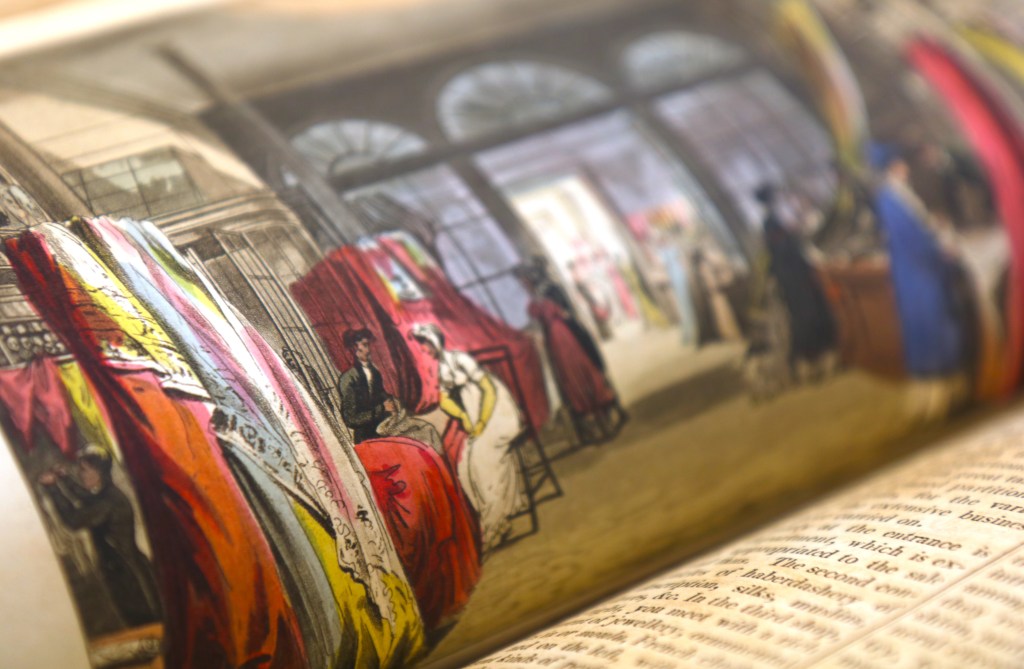
In 1796 the first ever department store opened in London: Harding, Howell & Co.’s Grand Fashionable Magazine. Measuring at about 22,500 sqft., this place was considered enormous for the 18th/19th-century. It contained five departments:
- Furs and fans
- Haberdashery (silks, muslins, lace, gloves, etc.)
- Jewelry, ornamental articles in ormolu, French clocks and perfumery
- Fabric for dresses and millinery (hats)
- Textiles (especially chintzes and their accessories)
The shops were designed to be attractive and enticing to the emerging middle class. They had large windows, glass chandeliers, large glass cases to display the merchandise, and tall ceilings from which to hang fabrics.
In 1809, Ackermann’s Repository of Arts published the following description:
“The house is one hundred and fifty feet in length from front to back, and of proportionate width. It is fitted up with great taste, and is divided by glazed partitions into four departments, for the various branches of the extensive business, which is there carried on. Immediately at the entrance is the first department, which is exclusively appropriated to the sale of furs and fans. The second contains articles of haberdashery of every description, silks, muslins, lace, gloves, etc. In the third shop, on the right, you meet with a rich assortment of jewelry, ornamental articles in ormolu, French clocks, etc.; and on the left, with all the different kinds of perfumery necessary for the toilette. The fourth is set apart for millinery and dresses; so that there is no article of female attire or decoration, but what may be here procured in the first style of elegance and fashion. This concern has been conducted for the last twelve years by the present proprietors who have spared neither trouble nor expense to ensure the establishment of a superiority over every other in Europe, and to render it perfectly unique in its kind.”
Ackermann’s Repository (3 August 1809)
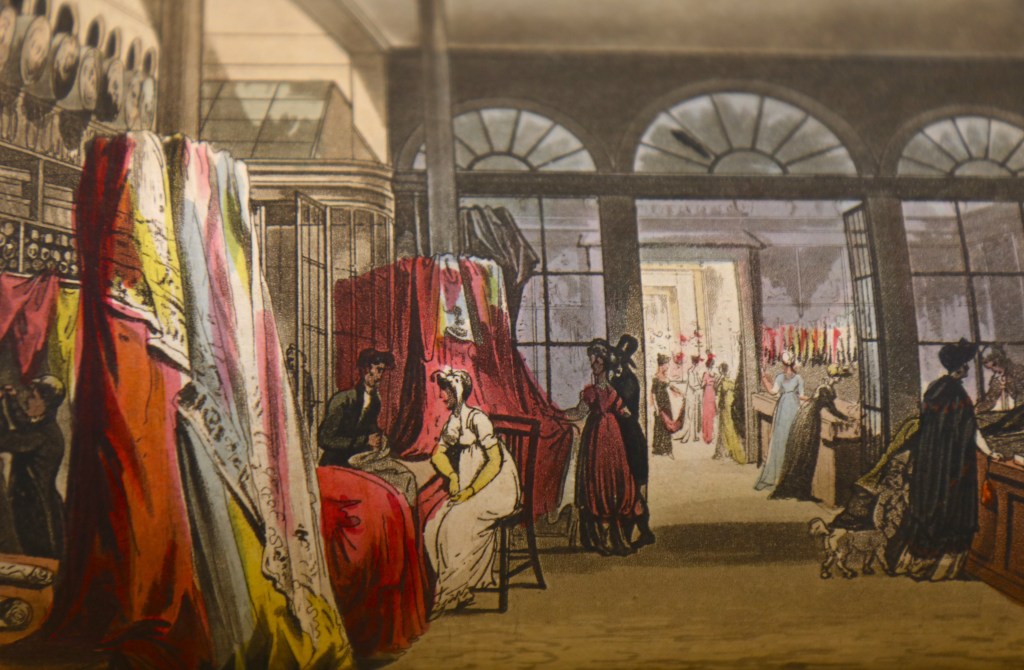
The opening of Hardings’ department store marks a significant shift for women’s independence in Regency London. For the first time women were able to shop on their own in public, safely and respectably. And, since all of the departments were located in the same structure, they did not have to walk along the street in public to visit different shops. Thus, they no longer needed male chaperones and they were no longer limited to buying from tradesmen who visited door-to-door. They were free to browse and choose for themselves.
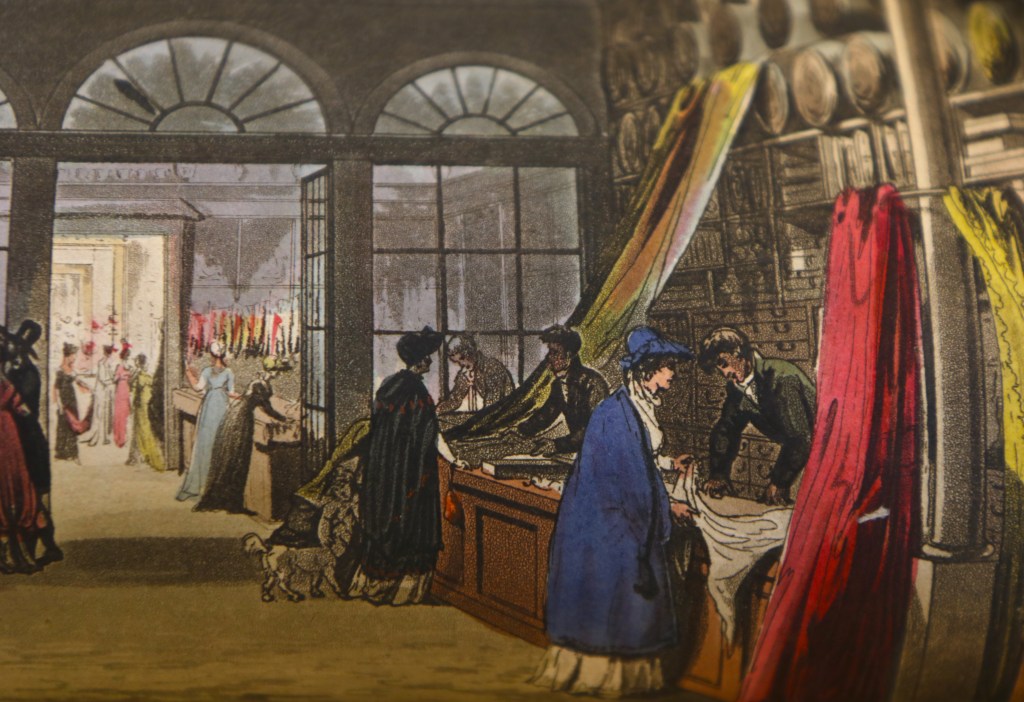
Today, if you go to 89 Pall Mall Street in London, you will find The Royal Automobile Club, but in the early 1800s, you might have spotted Jane shopping for hats and ribbons. Pall Mall was the London’s most fashionable streets and is often mentioned by Jane Austen. For example, it is outside a shop in Pall Mall that Colonel Brandon hears of John Willoughby’s engagement to Miss Grey in Sense and Sensibility. Indeed, the most frequently mentioned item of shopping in Jane Austen’s letters is fabric for dressmaking and she would undoubtedly have known Harding’s.
 Jane's Repository
Leave a comment